
Building an ADU in an HPOZ (Historic Zone): What We Learned + Case Study
Updated: Jul 23
If you're thinking about building an ADU on a property that sits inside a Historic Preservation Overlay Zone, an HPOZ, you're dealing with a different game than a standard ADU build. I want to walk you through exactly what that means, using a real project we just finished in Carthay Square, one of LA's historic neighborhoods.
This project took us from a duplex to a fourplex, added two brand new ADUs, and did it all while working inside one of the strictest design review processes in the city. Here's what we learned.


Project Highlights
Two matching 500 sq. ft. ADUs built behind an existing 100-year-old Spanish duplex in Carthay Square (Los Angeles HPOZ)
Property converted from a duplex into a fourplex using California's multifamily ADU law
One bedroom, one bathroom layout in each unit, mirrored floor plans sharing a fire-rated wall
Raised foundation construction with a full methane mitigation plan
Existing swimming pool compacted to make way for new construction
9-foot ceilings throughout each ADU for a more open, larger feel
L-shaped kitchen in each unit with full-size refrigerator, range, dishwasher, and integrated washer/dryer
Spanish tile accents in the kitchen carried through into the bathroom shower niche
Bathroom features floor-to-ceiling tile, a four-foot vanity, champagne bronze fixtures, and a framed glass shower
Large south-facing egress windows in each bedroom for natural light
Oversized bedroom closets, nearly 8 feet by 2 feet, built into the shared wall
Exterior fully matched to the historic main duplex: light yellow smooth stucco, green windows, gutters, and fencing
100-year-old garage restored rather than demolished, per HPOZ requirements, with a new door, stucco, and roof
Shared courtyard for all four units finished in terracotta red stamped concrete
Four separate electrical panels and four gas panels to independently service all four units
Two solar setups installed across the property

What Is an HPOZ?
An HPOZ, or Historic Preservation Overlay Zone, is a designation the City of Los Angeles places on neighborhoods with a concentration of historically or architecturally significant homes. If your property sits inside one, any exterior work, including a new ADU, goes through additional design review to make sure new construction respects the character of the neighborhood.
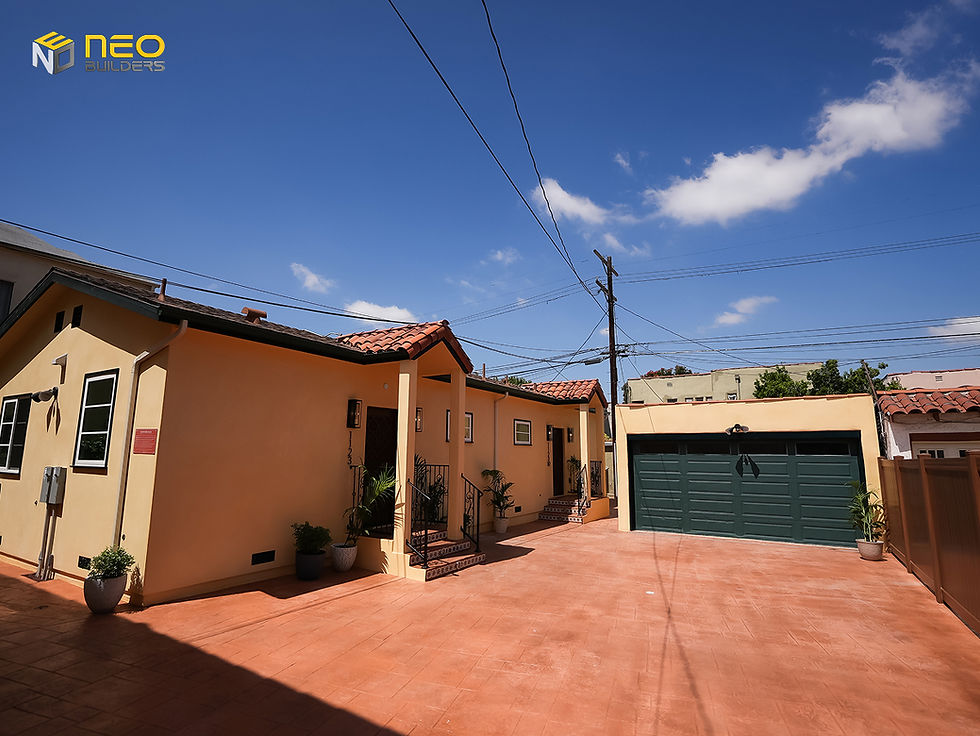
That means more than just pulling a standard permit. You're working with an added layer of scrutiny on materials, colors, rooflines, and how your new structure relates to the existing historic building on the lot.
Carthay Square, where this project is located, is exactly that kind of neighborhood. The duplexes around this property are over 100 years old, and the city has decided the character of these streets is worth protecting. That's a good thing for the neighborhood. It's also a real constraint you need to plan for as a builder or homeowner.
The Project: Duplex to Fourplex Under SB9

Before we get into the HPOZ side of things, here's the strategy that made this project possible in the first place.
California law allows multifamily properties to add at least two ADUs. This property already had a duplex on it, which meant we had a legal path to add two more units without needing to touch the main structure. We built two matching one-bedroom, one-bathroom ADUs behind the existing duplex, turning a two-unit property into a four-unit property on the same lot.

This is one of the most overlooked strategies for multifamily owners in California right now. You don't need to buy more land to add rental income. You may already have the zoning leverage sitting on the property you own. We're actually taking this further on our newest project, using SB1211 to add four more ADUs to a different multifamily lot. That one's coming soon.
But adding units was only half the challenge here. The other half was doing it inside a historic district.
The HPOZ Constraints We Had to Design Around
1. Matching the historic structure wasn't optional. On a typical ADU project, matching your new unit's exterior to the main house is a design choice. In an HPOZ, it can be a requirement. The HPOZ guidelines pushed us to match the ADUs to the existing 100-year-old Spanish duplex as closely as possible. Not just as a nice-to-have, but as a condition of approval.
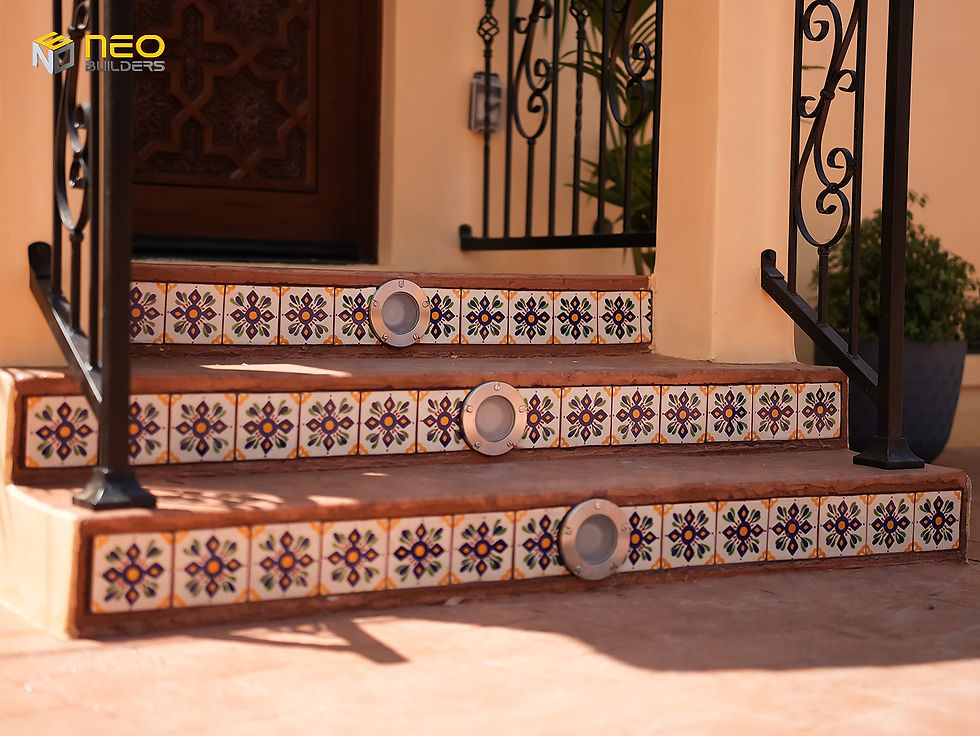
So we matched:
The light yellow smooth stucco on the main house
The green windows, gutters, attic vents, and garage
The terracotta red stamped concrete, pulled from tile patterns we saw elsewhere in the neighborhood
None of these were arbitrary choices. Every color and material ties directly back to what's already standing on that lot.
2. We weren't allowed to demo the old garage. There was a garage on this property that was, frankly, falling apart. On a non-HPOZ project, that's an easy call; tear it down and reclaim the space. Here, the HPOZ wouldn't allow it. We had to restore it instead: new garage door, new stucco, new roof, all while preserving the original structure's integrity. It took more time and more budget than a demo and rebuild would have, but it kept the historic fabric of the property intact.

3. Design review takes longer. Permitting an ADU in an HPOZ means your design goes through additional review specific to historic preservation, on top of standard building permitting. If you're planning a project in a zone like this, build extra time into your timeline. This isn't a project where you can rush the design phase.

Inside the Units
Once we got through design and permitting, we built two mirrored one-bedroom, one-bathroom ADUs, about 500 square feet each, on raised foundations with a methane mitigation plan built in.
Each unit has:
An L-shaped kitchen with full-size appliances, a spice rack, and Spanish tile accents under the cabinetry
A living room with 9-foot ceilings, which makes a small footprint feel a lot bigger than 500 square feet
A bedroom with a large south-facing egress window and an oversized closet built into the shared fire-rated wall between units
A bathroom with floor-to-ceiling tile, a walk-in shower with a tiled niche that pulls the same Spanish tile from the kitchen through the whole unit, and an oversized four-foot vanity

The two units share a fully revitalized courtyard with terracotta stamped concrete, tying all four homes on the property together visually.
The Engineering Side Nobody Sees
Behind the design decisions, this project had real technical complexity:
Compacting an existing pool to build on that portion of the lot
A methane mitigation plan under both raised foundations
Four separate electrical panels and four gas panels to service all four units independently
Two solar setups
Saving and restoring a century-old garage instead of rebuilding it
This is the part of the job that doesn't show up in glossy photos, but it's most of the actual work.
What This Means If You're Considering an ADU in a Historic Zone
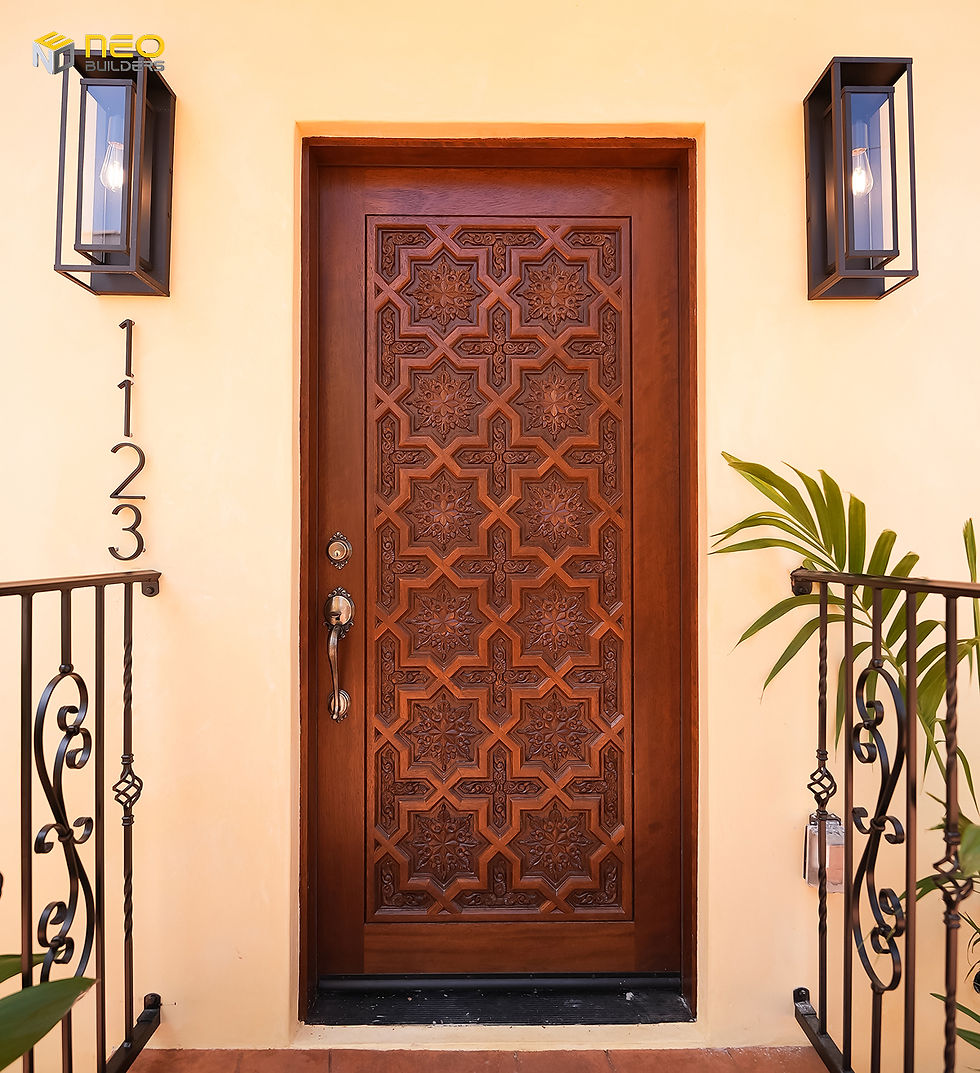
If your property sits inside an HPOZ, here's what to expect going in:
Your design will likely need to reflect the historic character of your existing home, not just your own preferences
Existing structures on your lot (like an old garage) may need to be preserved rather than demolished
Plan for a longer design review timeline than a standard ADU project
If your property is also multifamily, look into whether SB9 or SB1211 gives you the right to add more units than you think
Building smarter doesn't mean avoiding these constraints. It means understanding them early enough to design around them instead of getting surprised by them mid-project.
FAQ: Building an ADU in an HPOZ

Can you build an ADU in an HPOZ in Los Angeles? Yes. You can build an ADU on a property inside an HPOZ, but the design has to go through additional historic preservation review on top of standard ADU permitting. Expect closer scrutiny on exterior materials, colors, and how the new structure relates to the historic home already on the lot.
Does an ADU in an HPOZ have to match the existing house? Often, yes. Depending on the guidelines for your specific HPOZ, matching the ADU's exterior — stucco color, window color, roofline, materials — to the main historic structure can be a condition of approval, not just a design preference. On our Carthay Square project, we matched the yellow stucco, green windows and gutters, and terracotta tile from the original duplex directly onto the new ADUs.

Does building in an HPOZ take longer than a standard ADU project? Yes. You're adding a layer of historic preservation design review on top of the normal ADU permitting process. Plan for a longer timeline, especially in the design phase, and build that into your budget and expectations from day one.
Can you demolish an existing structure, like an old garage, on an HPOZ property? Not always. In our case, the HPOZ wouldn't allow us to demolish a deteriorating 100-year-old garage. We had to restore it instead — new door, new stucco, new roof — while keeping the original structure intact. Always check with your city's HPOZ guidelines before assuming you can remove an existing structure.

Can you still add multiple ADUs to a multifamily property inside an HPOZ? Yes. Being in an HPOZ doesn't cancel out California's ADU laws. On this project, we used the state law that allows multifamily properties to add at least two ADUs, and are using SB1211 on another project to add even more. The HPOZ affects design and review, not your legal right to add units.
How do I know if my property is in an HPOZ? The City of Los Angeles maintains a list of designated HPOZ neighborhoods, and your property's zoning information will show if it falls inside one. If you're not sure, this is one of the first things I check when someone books a call with me — it changes the entire design approach from day one.

Thinking About Building an ADU on Your Property?
Every property comes with its own constraints. Whether that's an HPOZ, a tricky lot, or multifamily zoning you didn't know you could use. I'd rather talk you through what's actually possible on your property before you spend money on a design that won't get approved.
Book a free 15-minute call with me and let's talk through your project, your lot, and what a realistic path forward looks like. You can grab a time here.
And if you're the type who wants to go deeper before you build, I also put together a course that walks through exactly how to plan, permit, and build an ADU without wasting time or money. You can find that at JosephPeretz.com as well.
I love this stuff. Reach out, and let's figure out what your property can do.


Digital communication has created new ways for people to form relationships and stay connected. Online (รับงานตรัง) communication allows two people to exchange messages instantly, share photos and videos, and keep up with each other’s lives from anywhere in the world. This kind of relationship can be exciting because it often begins with curiosity and grows through regular interaction. It also gives people the freedom to communicate at their own pace. Strong online relationships depend on mutual effort, emotional openness, and reliability. When both sides stay engaged, online communication can become a powerful way to build lasting human connection.